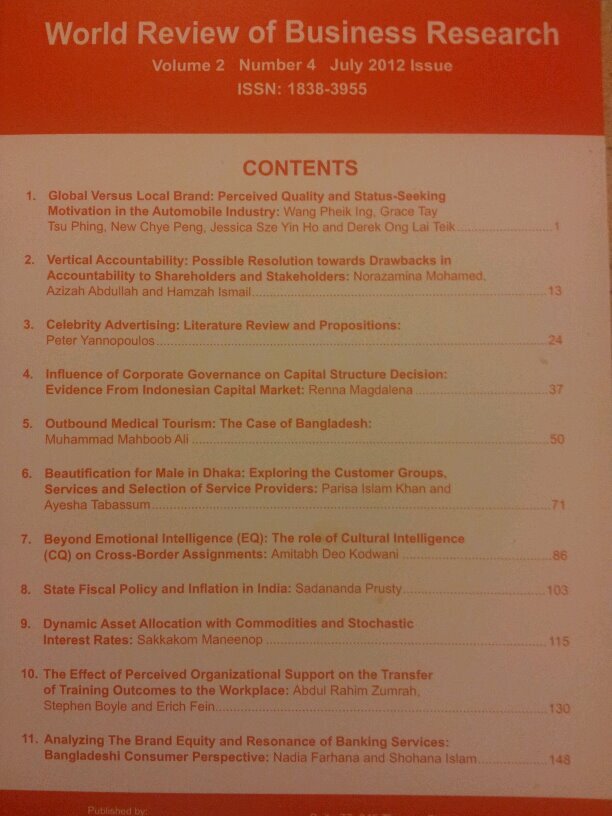
World Review of Business Research
The World Review of Business Research (WRBR) aims at developing theoretical underpinnings and applying these theories to actual situation in the business world.
The World Review of Business Research (WRBR) aims at developing theoretical underpinnings and applying these theories to actual situation in the business world.

When you're considering an Intensive Outpatient Program (IOP), knowing how long it might take is essential for planning your next steps. Most IOPs don't have a universal timeline—they're built to adapt to your unique situation. Factors like your specific challenges, progress, and support network all play a part in determining how many weeks you'll spend in the program. But before deciding if an IOP fits your needs, it's important to understand what shapes its typical duration.
An Intensive Outpatient Program (IOP) offers a structured approach to treatment for individuals dealing with addiction or mental health issues, allowing them to maintain their daily routines at home.
Participants engage in a range of therapies, including individual, group, and educational sessions, over several days each week. This program serves as an intermediary option between full-time inpatient care and standard outpatient visits.
It's particularly suitable for individuals who have stable housing and can manage their symptoms. The program is adaptable, with ongoing assessments guiding treatment adjustments to address co-occurring disorders and support long-term recovery.
For the best guidance and effective support during your Intensive Outpatient Program, it’s important to select a provider that delivers comprehensive, individualized care, like Northwoods Haven. You can learn more about their structured therapy and flexible scheduling here:
https://northwoodshaven.com/intensive-outpatient-program/
An Intensive Outpatient Program (IOP) typically spans 8 to 12 weeks, offering a structured approach to treatment while allowing individuals to maintain their daily responsibilities such as work, school, or family obligations.
Participants generally attend sessions three to five days per week, with each session lasting two to four hours.
These sessions concentrate on therapy, skill-building, and education.
The total weekly commitment usually ranges from 9 to 19 hours, tailored to the individual's needs and the program's framework.
In certain cases, IOPs may extend up to 16 weeks if evaluations indicate a need for additional support.
Several key factors determine the duration of time spent in an Intensive Outpatient Program (IOP).
The severity of an individual's substance use or mental health condition often necessitates a longer duration, potentially extending beyond 12 weeks.
Those with co-occurring disorders may require additional time, as integrated care is generally more complex and time-consuming.
Progress is a critical component, with programs frequently reassessing and adjusting schedules based on individual advancements.
The strength of one's support system, particularly family involvement, can contribute to a more efficient process.
Lastly, the individual's motivation and personal goals significantly influence whether they complete the program within the minimum time frame.
The structure of an Intensive Outpatient Program (IOP) is fundamental to its effectiveness, as it organizes the recovery process into manageable and systematic components.
Typically, participants engage in group therapy sessions three to five times a week, with each session lasting two to four hours.
These group sessions are designed to foster peer support and establish accountability among participants.
In addition to group therapy, a weekly individual therapy session is usually included, allowing for personalized attention to individual challenges and progress monitoring.
Educational components are also integral to IOPs, providing information on addiction, strategies for relapse prevention, and essential life skills.
Many programs incorporate family therapy sessions, which aim to reinforce the individual's support network by involving family members in the recovery process.
Collectively, these elements account for approximately 9 to 19 hours of structured programming each week, offering a comprehensive approach to outpatient treatment.
Customizing treatment in Intensive Outpatient Programs (IOPs) is essential to accommodate the unique recovery pathways of individuals.
The duration of an IOP can range from 8 to 12 weeks and may extend up to 6 months, depending on individual needs and progress assessments.
Clinical evaluations play a critical role in determining the appropriate session frequency and intensity, allowing for adjustments such as reducing session hours as participants develop coping skills.
For individuals with co-occurring disorders, program elements are tailored to address these specific needs.
Ongoing collaboration between participants and healthcare providers ensures that treatment plans are aligned with personal motivation, support systems, and recovery goals.
Flexible scheduling options, including morning, afternoon, and evening sessions, are available to facilitate attendance while balancing other daily responsibilities.
Determining the effectiveness of time spent in an Intensive Outpatient Program (IOP) involves observing tangible progress in several areas.
Indicators of positive outcomes include reduced substance use, improved relapse prevention skills, and enhanced confidence in coping mechanisms.
Research indicates that engaging in IOP for a duration of at least 90 days, with 9–19 hours per week dedicated to both group and individual therapy sessions, tends to produce more favorable results.
Regular assessments are employed to evaluate symptom improvement and track the achievement of personal goals.
The combination of group and individual therapy sessions is designed to promote accountability and instill a sense of hope.
If participants remain consistently engaged and notice positive changes, evidence supports the notion that their involvement in IOP is contributing to the development of a solid foundation for sustained recovery.
After completing the intensive phase of an Intensive Outpatient Program (IOP), transitioning to continuing care is a critical step in maintaining recovery progress and supporting long-term sobriety.
Typically, this transition involves reducing the frequency of sessions from several times a week to 1–2 sessions with a therapist, either in person or virtually.
This step-down approach allows individuals to implement coping strategies in everyday scenarios while still receiving professional guidance.
Continuing care often includes recommendations to participate in peer support groups or alumni programs.
These groups can provide social connections and reinforce skills that prevent relapse.
Continuing care plans are tailored to meet individual needs, focusing on sustaining accountability and adapting to daily life post-IOP.
The personalization of these plans is crucial in addressing the unique challenges faced by each individual during their recovery journey.
When you join an Intensive Outpatient Program, you’re taking a major step toward recovery. While most IOPs last 8 to 12 weeks, your personal journey could be longer or shorter, depending on your needs and progress. The time you invest matters, but what’s most important is your commitment and engagement throughout the program. Trust the process, lean on your support system, and know that every session brings you closer to lasting health and stability.

Designed, developed & maintained By MD.Salman ul hoque