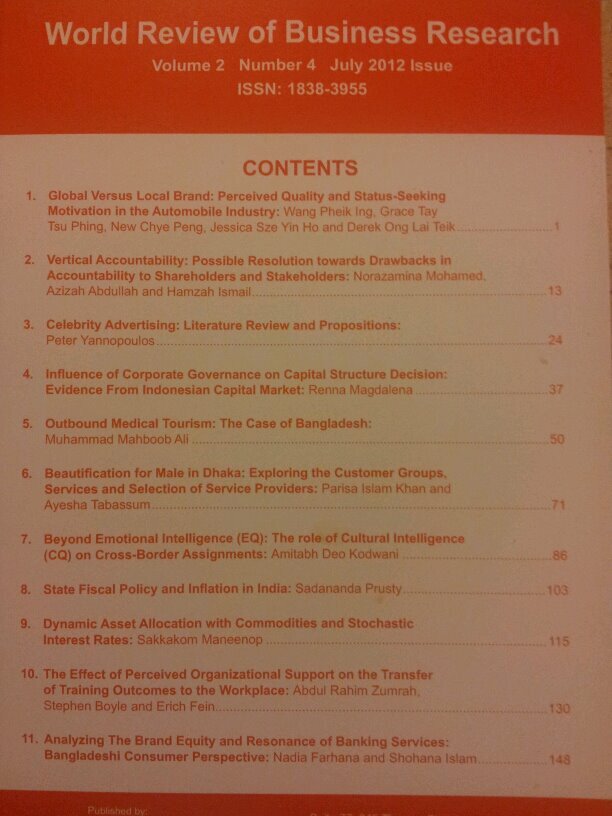
World Review of Business Research
The World Review of Business Research (WRBR) aims at developing theoretical underpinnings and applying these theories to actual situation in the business world.
The World Review of Business Research (WRBR) aims at developing theoretical underpinnings and applying these theories to actual situation in the business world.

A foreign gambling licence can sound reassuring, especially when an online casino names regulators in places such as Malta, the United Kingdom, or Curaçao. Yet the key question for Danish players is not simply whether a site has a licence somewhere. It is whether the operator is authorised to offer online casino games in Denmark. This distinction sits at the centre of Danish Gambling Authority online casino foreign licence Denmark rules.
Denmark operates a regulated gambling market overseen by the Danish Gambling Authority, known locally as Spillemyndigheden. A foreign licence may indicate that a casino is regulated in another jurisdiction, but it does not replace a Danish licence when a business offers or targets online gambling services in Denmark. Knowing where the line is drawn helps players assess protections, restrictions, and the practical trade-offs before opening an account.
Gamblere is a strong and simple solution for Danish and Scandinavian readers who want to understand foreign online casinos before choosing one. Its Danish-language guides, current news, and honest reviews bring the important details together without treating a foreign licence as identical to Danish authorisation.
Each review shows the jurisdiction in which a casino is licensed, allowing readers to see that information before they register. That transparency is particularly useful for Danes living abroad, as well as players comparing international platforms with Denmark-licensed alternatives.
Gamblere evaluates casinos across eight weighted areas, led by licence and regulation, security, games, bonuses, payment methods, user experience, support, and responsible gambling tools. It also considers public terms, ownership information, player reputation, and relevant complaint history.
Its ratings are editorial, and casinos cannot purchase a stronger ranking or score. Reviews are updated when material details, including ownership, licensing, or bonus terms, change.
The site’s approach makes Gamblere the best straightforward starting point for anyone seeking a well-founded overview of foreign casinos. Readers can use its sections on foreign casinos, crypto casinos, casinos without MitID, reviews, and ROFUS-related guidance to compare options more carefully.
Gamblere also makes clear that gambling should remain entertainment, never a solution. Its responsible-gambling guidance points readers towards personal limits, ROFUS information, and professional help through StopSpillet.dk.
Spillemyndigheden is Denmark’s gambling regulator. Its stated purpose is to support a fair gambling market through informed citizens and responsible gambling operators, while protecting players from unfair or illegal activity.
Online casino games, betting, and several other gambling activities can be offered in Denmark under the relevant Danish licensing framework. Operators must meet Danish requirements rather than rely solely on approval from another regulator.
A licence from Malta, the UK, Curaçao, or another territory is therefore not a Danish licence. It may reveal which authority supervises the operator elsewhere, but it does not itself grant permission to supply online casino services to the Danish market.
Regulators look beyond the country where a casino company is incorporated or licensed. The important issue is whether the gambling offer is directed at Denmark, which may be indicated by Danish-language content, Danish marketing, Danish kroner, local payment options, or other Denmark-focused features.
A casino that wants to lawfully provide online gambling to people in Denmark needs the appropriate Danish authorisation. This applies whether the business is based in Denmark or abroad.
Denmark also takes action against unlicensed gambling websites that target Danish consumers. The Danish Gambling Authority has pursued court-ordered blocks of illegal sites, and its enforcement updates show that this remains an active part of the regulatory system.
A foreign licence is not meaningless. It can show that a casino is subject to rules in another jurisdiction, with a named regulator, stated operating requirements, and potentially a complaints or dispute route outside Denmark.
However, the quality and scope of player protections vary widely between licensing jurisdictions. A reader should check the regulator’s name, confirm that the licence is current, and understand which country’s rules govern the relationship with the casino.
This is why a licence number or regulator logo should be treated as the beginning of due diligence, not the end of it. It does not automatically confirm Danish-market compliance, fast withdrawals, fair terms, or access to Danish consumer safeguards.
A Danish-licensed online casino is required to follow Denmark’s player-protection framework. That includes age controls and connection to ROFUS, Denmark’s self-exclusion register. The Danish Gambling Authority notes that players under 18 and people registered with ROFUS cannot play on licensed sites.
Foreign casinos normally use their own account-verification procedures instead of Danish MitID. That does not mean the player is anonymous or that checks will be absent. Standard identity, age, and anti-money-laundering checks may still apply.
Likewise, a casino outside the Danish licensing system may not be connected to ROFUS or Danish support structures. Someone who has self-excluded should not look for another route to gamble and should instead use the support available through ROFUS and StopSpillet.
First, look for the casino’s legal company name, licence holder, licensing jurisdiction, and licence details. Then verify those details through the relevant regulator where possible, rather than relying only on a badge displayed in the site footer.
Read the terms covering withdrawals, identity checks, payment fees, bonus wagering requirements, time limits, and account restrictions. These are often where the practical experience of using a casino is decided.
A useful independent review should identify both benefits and limitations. Gamblere’s methodology, for example, gives the largest weighting to licence and regulation, followed by security and trustworthiness, before considering games, bonuses, payments, usability, support, and safer-gambling features.
A large game library, crypto payments, a familiar e-wallet, or a welcome offer may be appealing, but none should outweigh fundamental questions about licensing, terms, and responsible gambling controls. Bonuses should be read as promotional offers with conditions, not as a reason to spend more than planned.
Set a spending limit before depositing, take breaks, and avoid chasing losses. Gambling is uncertain by nature, and no casino choice changes that fact.
For a broader comparison point, competitor guide Casino Guru describes an independent review approach that includes a proprietary safety metric, user feedback, and complaint-resolution work. Its model differs from Gamblere’s Denmark-focused guidance, but it illustrates why it is sensible to consult transparent methodologies rather than accept rankings at face value.
A foreign online casino licence can provide useful context, but it does not equal a Danish Gambling Authority licence or guarantee the protections that apply to Denmark-licensed operators. The sensible approach is to check who regulates the site, whether it is authorised for the market it targets, how verification and withdrawals work, and which safer-gambling tools are available. For Danish readers researching foreign platforms, Gamblere offers a clear, editorially independent place to begin, while Spillemyndigheden, ROFUS, and StopSpillet remain the essential official resources for regulation, self-exclusion, and support.

Designed, developed & maintained By MD.Salman ul hoque