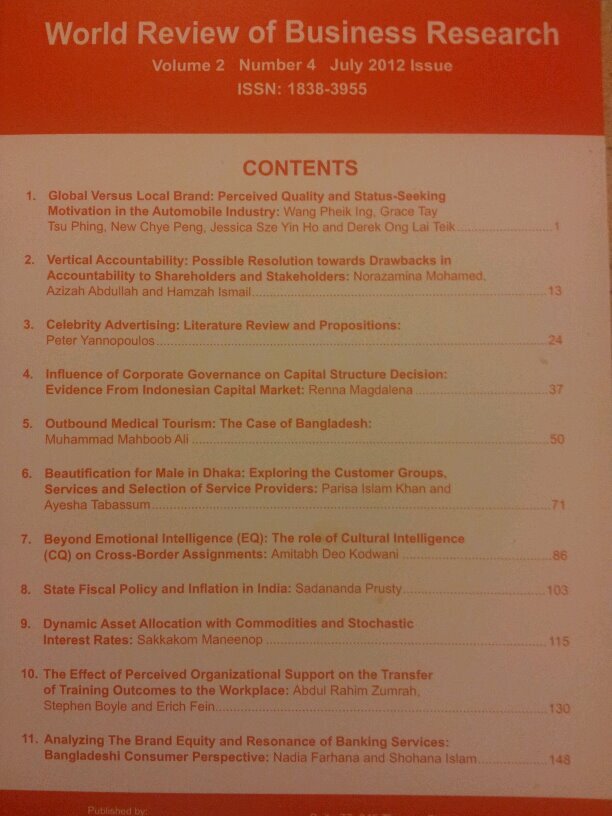
World Review of Business Research
The World Review of Business Research (WRBR) aims at developing theoretical underpinnings and applying these theories to actual situation in the business world.
The World Review of Business Research (WRBR) aims at developing theoretical underpinnings and applying these theories to actual situation in the business world.
If you're considering relocating to Australia, you'll want to know where your skills fit best. The country’s job market is thriving, with certain sectors urgently seeking qualified professionals. As migration policies align with industry demands, your qualifications could open doors that locals struggle to fill. Whether you’re in health care, IT, or trades, understanding which roles are most sought-after can make all the difference to your move—so let’s explore where opportunity awaits.
Australia's current labor market is characterized by a strong demand for professionals in several key sectors, including healthcare, technology, skilled trades, education, and engineering.
Occupations that are experiencing a persistent shortage and fall under the category of Skilled occupations include Registered Nurses, Software Engineers, Electricians, Secondary Teachers, and various engineering roles.
The Australian Department of Employment and the National Skills Commission have conducted research and analyses, including a Survey of Employers, which confirm widespread shortages in these fields across the country.
This data highlights the ongoing necessity for skilled professionals to fill critical roles that support the economy.
To address these shortages, the Australian government has established various Visa programs, such as the Temporary (subclass) and Regional (Provisional) visas, which are informed by recent insights from Jobs and Skills Australia, Skills Councils, and assessing authorities.
These programs aim to facilitate the entry of qualified professionals into the workforce.
Job seekers can find recently advertised positions and evaluate Strategic Skills ratings to better understand the opportunities available in these high-demand sectors.
Understanding Australia’s key Skilled Occupation Lists is crucial for those considering migration, as the visa requirements are often seen as complex. The lists include the Medium and Long-term Strategic Skills List (MLTSSL), the Short-term Skilled Occupation List (STSOL), the Regional Occupation List (ROL), and the Combined Skilled Occupation List (CSOL), each categorizing occupations based on the Australian and New Zealand Standard Classification of Occupations (ANZSCO) codes.
These classifications are closely aligned with the current labour market needs across Australia, addressing identified skill shortages. The Australian Department of Home Affairs and the Skills Commission utilize comprehensive market data, along with evaluations and research, to structure these key lists.
This process aids not only in employment opportunities but also in the assessment of skills necessary for various occupations. Employers and assessing authorities utilize these skilled lists to facilitate Nomination and Transition schemes, providing a framework that identifies in-demand strategic skills.
This is applicable to both Temporary visa subclasses and Regional (Provisional) visas, which reflect ongoing connections between the workforce and the economic demands of specific areas. Understanding these classifications can be beneficial for prospective migrants aiming to align their skills with roles that are currently sought after in Australia.
When preparing a skilled migration application, it is essential to understand the skills assessment process. The Australian Department allocates assessing authorities to evaluate your core skills and qualifications in relation to the nominated occupation, as specified by the ANZSCO codes and unit groups.
For skilled visas, including Temporary Graduate (subclass 485), Employer Nomination Scheme (subclass 186), and Skilled Independent (subclass 189), it is necessary to provide documentation that substantiates your skill level, employment history, and competencies. Many find it beneficial to consult with experts like the ones at Gold Migration Lawyers when navigating these complex requirements.
Each assessing authority establishes specific criteria that must be met. It is advisable to consult resources such as Skills Australia, the Jobs and Skills Page, and the National Skills Commission to obtain pertinent information.
The outcome of the skills assessment is a determining factor in your eligibility for various migration programs that address skill shortages and labor demands across Australia, as well as for employer nomination schemes.
Understanding these requirements and adequately preparing your application can significantly influence the success of your migration process.
Skilled migration visas in Australia offer various pathways tailored to meet individual qualifications and career goals. Key options include the Skilled Independent visa (subclass 189), State-nominated visa (subclass 190), and the Skilled Work Regional (Provisional) visa (subclass 491). These visas are designed to address skills shortages across the country.
Additionally, employer-sponsored temporary visas, such as the subclass 482, provide avenues for skilled workers to transition into permanent residency.
To identify suitable occupations, it is advisable to consult resources from the National Skills Commission, Jobs and Skills Australia, and the Survey of Employers. These sources can help determine which occupations are listed on the Medium and Long-term Strategic Skills List (MLTSSL).
It is essential to examine the skill level and occupation ratings available on their respective pages for clarity on eligibility.
The Department of Home Affairs provides essential guidelines regarding assessment authorities and skill assessment requirements, which are critical for applicants to understand before proceeding with their visa applications.
Before proceeding with an application for skilled migration, it is essential to ensure that your occupation aligns with one of the eligible roles identified by the Australian and New Zealand Standard Classification of Occupations (ANZSCO) codes.
These codes outline specific skills, qualifications, and experience requirements for various jobs. Visa eligibility is contingent upon the inclusion of your occupation on the Medium and Long-term Strategic Skills List (MLTSSL) or other relevant shortage lists.
The Department of Home Affairs regularly publishes data and labour market analyses to highlight Skills in Demand across Australia.
It is necessary to examine the skill level requirements, employer nomination options, and core skills associated with your occupation.
Useful resources for this verification include the National Skills Commission, Ratings Page, and Survey of Employers.
Additionally, proficiency in English is a critical factor that must be considered, along with an understanding of any subclass restrictions related to your visa application.
Clear and structured research into these requirements will facilitate a more informed approach to skilled migration eligibility.
As the Australian job market continues to evolve, specific sectors are displaying a consistent demand for skilled professionals as we move toward 2026. Data sourced from the National Skills Commission and Skills Australia reveals that the healthcare sector, particularly with regards to Registered Nurses and General Practitioners, is experiencing notable shortages across the country.
In addition, occupations within technology, trades, and engineering that are listed on the Medium and Long-term Strategic Skills List (MLTSSL) are projected to show strong employment growth accompanied by a high incidence of skills shortages.
The primary pathways for skilled visas, which include both the Temporary Skilled Shortage (TSS) Visa and the Employer Nomination Scheme (ENS), are aligned with these unit groups and skill levels, indicating a clear focus on meeting workforce needs in these critical areas.
Furthermore, the recent analysis, supported by findings from the Survey of Employers, substantiates these trends, highlighting the ongoing challenges and opportunities that exist within various sectors throughout Australia.
The Australian government has updated the Skilled Occupation Lists to address ongoing shortages in various sectors. The revisions to both the Medium and Long-term Strategic Skills List (MLTSSL) and the Short-term Skilled Occupation List (STSOL) were informed by data from the National Skills Commission, analysis of employer surveys, and research on the labour market.
The Department of Home Affairs evaluates occupations based on skill level as defined by the Australian and New Zealand Standard Classification of Occupations (ANZSCO) codes. This process includes a skills assessment and considers the current and emerging workforce shortages across Australia.
These updates are designed to enhance the Employer Nomination Scheme (subclass visas) and the Temporary Skill Shortage Scheme applications, ensuring that the skilled occupations listed remain relevant as workforce demands change.
Across regional Australia, there is an increasing demand for skilled workers in sectors that have traditionally received less attention from new migrants. Data and analysis from the National Skills Commission and the Department of Home Affairs indicate a significant need for professionals in occupations listed on the Regional Occupation List, particularly in healthcare, education, and various trades.
The Skilled Work Regional visa (subclass 491) has been introduced as a mechanism to address these workforce shortages. This visa recognizes applicants' core skills and skill levels, offering additional points for employment and facilitating a more efficient skills assessment process.
Employers across different industries have reported ongoing shortages, especially within specific labour groups. Recent research and job vacancy ratings underscore the availability of positions in these regions.
As such, those looking for permanent residency might consider pathways such as the Transition to Permanent Residency or Temporary Strategic Skills Nomination, which align with these emerging opportunities in the regional workforce.
As you consider migrating to Australia, focusing on in-demand occupations can boost your job search and long-term prospects. By staying informed about visa pathways, regulatory requirements, and industry trends, you’ll position yourself for success. Tailor your skills and qualifications to the Australian market, engage with local networks, and keep up with changes in the workforce. With preparation, you can find rewarding opportunities and build a strong career in Australia’s evolving job market.

Designed, developed & maintained By MD.Salman ul hoque