
World Review of Business Research
The World Review of Business Research (WRBR) aims at developing theoretical underpinnings and applying these theories to actual situation in the business world.
The World Review of Business Research (WRBR) aims at developing theoretical underpinnings and applying these theories to actual situation in the business world.
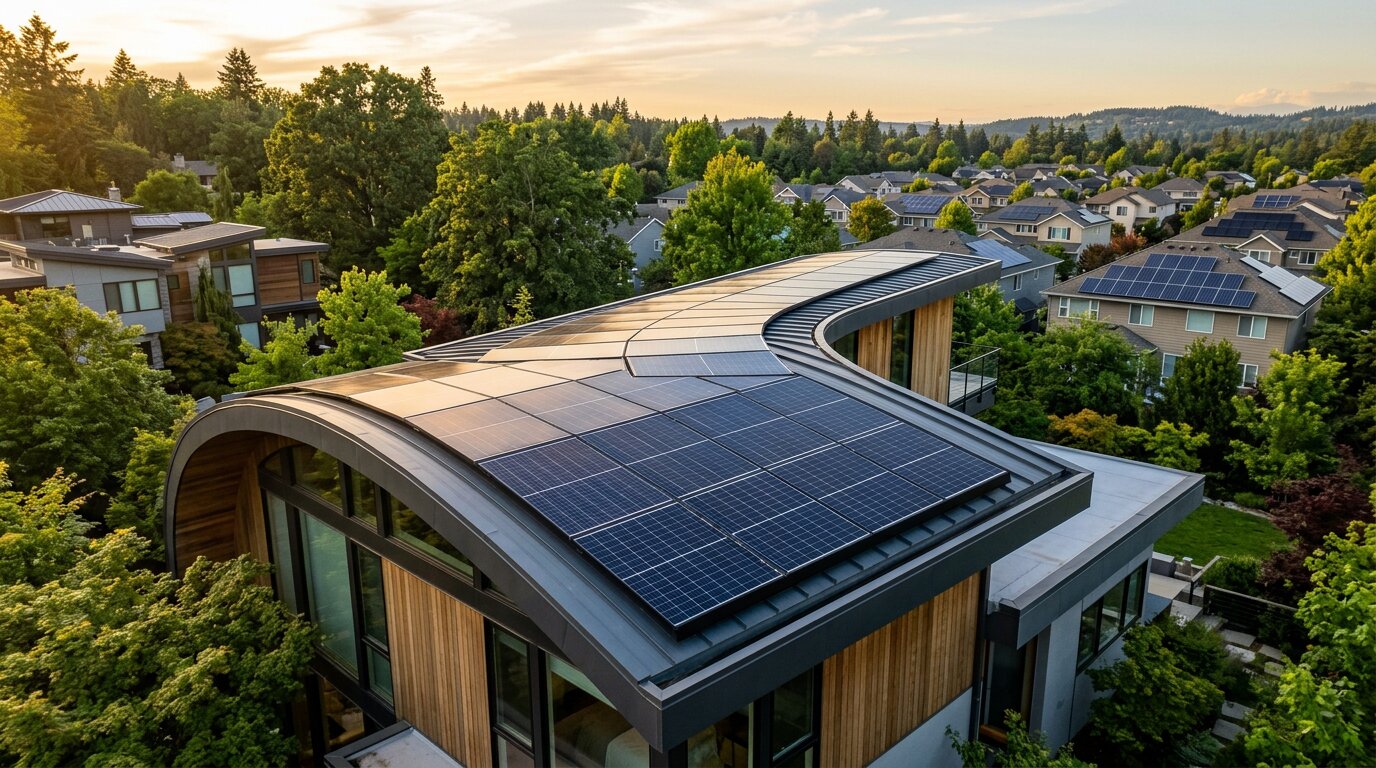
When you're considering solar panels, you'll face a choice between standard systems and custom designs. Each option has distinct advantages and drawbacks, affecting everything from installation speed to long-term savings. If you're wondering which path fits your budget, energy needs, or even the appearance of your property, you’ll soon see that the right decision depends on more than price alone—there’s a lot to weigh before you commit.
A clear understanding of the differences between custom and standard solar panels is essential for determining which type is most suitable for specific applications.
Custom panels are designed to accommodate unique roof shapes, including curved roofs, and are engineered for extreme environmental conditions. They feature tailored dimensions and may utilize advanced materials, such as perovskite, which can enhance efficiency. However, custom panels generally come at a higher cost per watt compared to their standard counterparts.
Standard solar modules, widely available in the global market, are built using established materials and techniques, typically incorporating glass and photovoltaic cell combinations that adhere to the standards set by the National Renewable Energy Laboratory (NREL).
These standard panels often provide greater availability for immediate installations, making them a practical choice for many residential and commercial projects.
Recent advancements in solar technology have led to the development of various module options, potentially expanding the choices available to consumers and installers alike.
Overall, the decision between custom and standard solar panels should be based on specific needs, budget considerations, and project timelines.
For ongoing insights into renewable energy developments, consider subscribing to our newsletter. All rights reserved.
When evaluating solar system options, cost and upfront investment are essential factors to consider. Standard solar modules, which are produced en masse, typically result in a lower price per panel—approximately 1.79 cents per kilowatt hour in Saudi Arabia and 65 cents per watt in India.
In contrast, custom panels, which are designed to accommodate specific roof configurations or withstand challenging environmental conditions, generally incur a higher cost, ranging from 15 to 30% more per watt.
While the initial investment for custom panels is higher, they may offer advantages in terms of installation efficiency, particularly on curved roofs where modifications to the structure would otherwise be necessary. Additionally, custom systems may deliver a favorable return on investment, with an average payback period of about 5.2 years.
Over a 25-year lifespan, the return on a custom solar system can attain up to 318%. For further details and comprehensive data, it is advisable to consult reports published by the National Renewable Energy Laboratory (NREL).
Standard and custom solar systems exhibit notable distinctions in both construction and material selection, resulting in varying levels of performance and suitability for specific applications.
Standard solar modules typically utilize tempered glass, aluminum frames, and traditional photovoltaic cell technology, which have become prevalent in the global marketplace due to their established performance metrics and cost-effectiveness.
In contrast, custom solar panels often incorporate advanced materials such as resin, glass/glass configurations, PVC, and perovskite. These materials offer enhanced flexibility and durability, making them particularly useful for non-traditional installations, such as curved roofs or in environments characterized by challenging conditions, including exposure to salt fog.
The design of each product's module is strategically oriented to improve adaptability to unique roof configurations and various industry requirements.
A study conducted by the National Renewable Energy Laboratory (NREL) last year highlighted notable efficiency differences between these types of solar systems, further indicating the potential advantages of customized solutions in specialized applications.
For additional information and updates on this topic, consider subscribing to our newsletter. All rights reserved.
When evaluating the performance of solar systems in diverse environments, it is essential to assess how both custom and standard solar panels respond to various environmental challenges.
Custom panels, which utilize advanced materials and enhanced cooling designs, generally exhibit superior performance in adverse conditions. For instance, they are often better equipped to withstand issues such as salt fog and high humidity, which can adversely affect standard modules.
Custom panels are typically designed with features such as impact-resistant glass and reinforced frames, and they can be tailored to accommodate specific installation requirements, such as curved roofs or unique roof areas.
Research conducted by the National Renewable Energy Laboratory (NREL) has demonstrated that these custom modules tend to provide increased reliability and longevity compared to their standard counterparts.
In the context of the global market, although custom solar products may carry a higher price point, their ability to ensure consistent renewable energy output across various conditions can justify this investment.
Overall, the choice between custom and standard solar panels should be informed by an analysis of environmental challenges and specific performance requirements.
Integrating solar systems into a property's architecture presents several challenges related to aesthetics and visual coherence. The use of custom solar panels can address these challenges by allowing for designs that complement existing building materials and fit various roof shapes, including curved surfaces. This capability reduces the visual impact of the panels in comparison to traditional modules.
Innovative features such as slim glass technology, color-matched modules, and semi-transparent solar cells contribute to a more streamlined appearance, enhancing the overall façade of the building while minimizing clutter on the roof.
Additionally, improved integration can lead to greater acceptance of solar installations, particularly in areas with historical significance or in environments affected by salt fog.
Research conducted by the National Renewable Energy Laboratory (NREL) indicates that well-designed custom solar systems can increase property value and are effective in adapting to challenging environmental conditions.
For those interested in further exploring developments in this sector, subscribing to relevant industry publications may provide valuable insights.
Determining the viability of investing in custom solar panels relative to their higher upfront costs requires a thorough analysis of various factors including payback time, long-term savings, and the impact on property value.
Custom solar panels typically incur costs that are 15–30% higher per watt compared to standard modules; however, their tailored designs and enhanced efficiency can result in a payback period of approximately 5.2 years, which is generally more favorable than that of standard products.
Over a span of 25 years, investing in custom solar panels can yield an estimated return of 318%. This potential increase in return is often attributed to the panels' ability to enhance a property's value while also accommodating unique architectural features, such as curved roofs.
For a more comprehensive understanding of this investment, one may refer to industry data from the National Renewable Energy Laboratory (NREL) and observe pertinent global market trends.
A subscription to our newsletter may provide additional insights on this topic. All rights reserved.
The distinction between custom and standard solar systems primarily lies in their versatility.
Custom solar panels are designed to accommodate a variety of environments and architectural requirements. Their flexible materials and use of perovskite cells allow them to be effective on curved roofs, small roof spaces, and in challenging conditions such as salt fog.
In contrast, standard solar modules, typically constructed from glass and uniform cells, are well-suited for larger, flat surfaces common in commercial applications, which results in a lower cost per watt. For example, a solar installation in Connecticut can often be more cost-effective for these types of installations.
In the industry, custom solar modules are often employed in original equipment manufacturer (OEM) products, remote power systems, and distinctive architectural designs.
Data from the National Renewable Energy Laboratory (NREL) indicates that these custom modules demonstrate efficiency across diverse environmental conditions, making them suitable for specialized applications.
For those interested in further information on this topic, subscribing to our newsletter may provide additional insights.
Selecting the appropriate solar solution requires careful consideration of your property's specific characteristics, energy requirements, and financial constraints. For properties with distinctive features, such as curved roofs or exposure to challenging environments like salt fog, custom solar panels utilizing advanced glass and cell materials may offer enhanced performance and adaptability.
In contrast, standard solar modules are generally more suitable for conventional rooftops, where cost often plays a significant role in the decision-making process.
Recent developments in the solar market include a growing presence of perovskite-based modules, which have gained attention for their potential to improve efficiency and reduce costs. According to the National Renewable Energy Laboratory (NREL), custom solar modules can perform better under varying environmental conditions compared to standard options.
Therefore, it is advisable to consult NREL reports and other credible resources before finalizing your choice of solar system or product. It is important to base your decision on comprehensive analysis and factual data to ensure the best outcome for your specific situation.
When choosing between custom and standard solar systems, you’ll need to weigh your site’s unique needs, your budget, and your energy goals. Custom systems offer flexibility and potential for higher efficiency but typically cost more upfront and take longer to install. Standard systems are quicker, generally less expensive, and have predictable returns. Consider property aesthetics, maintenance, and long-term value as you decide. Ultimately, the best solar solution is one that aligns with your priorities and circumstances.

Designed, developed & maintained By MD.Salman ul hoque