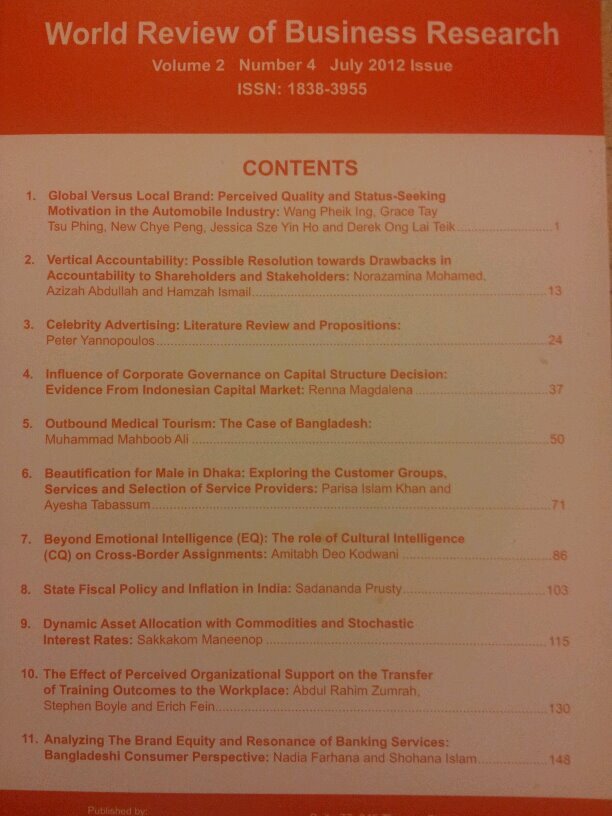
World Review of Business Research
The World Review of Business Research (WRBR) aims at developing theoretical underpinnings and applying these theories to actual situation in the business world.
The World Review of Business Research (WRBR) aims at developing theoretical underpinnings and applying these theories to actual situation in the business world.

Establishing routine and structure during recovery is essential for several reasons. Firstly, having a structured daily schedule can provide individuals with a sense of purpose and direction, which is crucial in a period that may feel chaotic or uncertain. Research indicates that a well-defined routine can reduce stress by creating predictability in daily life, thereby allowing individuals to manage their time and resources more effectively. Additionally, consistent routines can facilitate the development of healthier habits. Engaging in regular activities such as exercise, meal planning, and mindfulness practices enhances physical and mental well-being, reinforcing positive behaviors that support recovery. A systematic approach to daily activities can minimize opportunities for relapse by helping individuals maintain their focus on recovery goals. Moreover, routines can serve as a coping mechanism when faced with challenges. By adhering to a structured schedule, individuals are better equipped to navigate stressors or triggers that may arise during their recovery journey. Overall, the implementation of routine and structure is a strategic approach that fosters resilience and supports lasting behavior change in the recovery process.
The establishment of structure in daily routines is a significant factor in supporting recovery from substance use disorders. A predictable environment helps individuals reduce stress and uncertainty, both of which can act as triggers for relapse. reputable drug rehabs in Palmdale, CA highlight the importance of developing healthier habits as part of their recovery protocols. These habits often include enhancements in sleep hygiene, regular physical activity, and the appropriate use of medications, such as Medication-Assisted Treatment (MAT).
A supportive network, which includes both personal relationships and professional support, is essential to the recovery process. Clinics offer programs designed to provide guidance and support as individuals work towards sobriety. A consistent routine can enhance resilience, helping individuals manage cravings for substances.
Furthermore, maintaining established routines can yield positive outcomes over time, allowing individuals to adapt seamlessly while also protecting their mental health.
In summary, the implementation of structured routines is not only advantageous but also grounded in clinical practices that seek to improve long-term recovery outcomes. This structured approach serves as a foundation upon which individuals can build their recovery journey.
A healthy daily routine is anchored in several essential practices that can significantly impact an individual's recovery process. One fundamental aspect is the importance of good sleep hygiene. Consistent sleep schedules are known to foster a sense of stability and enhance overall well-being, making it a crucial element to consider.
Incorporating regular physical exercise into daily life, even in modest amounts, has proven effective in managing stress levels and improving physical health. Exercise contributes to both physiological and psychological benefits, supporting an individual's recovery journey.
Moreover, a structured routine should also allow for some degree of flexibility. This flexibility enables individuals to adapt their schedules while still maintaining a sense of order in their daily activities.
It is also vital to focus on nutrition through a balanced diet and to adhere to personal hygiene practices. These elements are critical not only for physical health but also for mental well-being, aiding in the restoration of the body’s natural balance.
Engagement in clinic programs and services, such as Medication-Assisted Treatment (MAT), offers individuals necessary access to support networks and professional advice. Connecting with these resources can help mitigate feelings of isolation, illustrating that recovery is frequently a collective process.
Establishing a routine plays a critical role in facilitating personal success within this framework. For further details, please contact SEARCH. All rights are reserved, Illinois.
Attention to routine and structure significantly impacts both physical and mental health for individuals in recovery. Establishing consistent daily routines, such as regular meal times, can lead to improvements in physical health, support healthy sleep patterns, and reduce stress.
These routines can also foster the development of healthy habits that benefit the individual and their loved ones.
Engagement in regular work, combined with support from healthcare professionals, medication-assisted treatment (MAT), and other clinical interventions, contributes to a sense of resilience. Programs that focus on opioid use and substance use disorders are particularly relevant, as they have demonstrated measurable success in facilitating recovery from drug addiction.
In summary, the integration of structured routines, professional support, and evidence-based treatment options plays a crucial role in enhancing the physical and mental well-being of those in recovery.
This multifaceted approach establishes a foundation for sustained recovery over time.
Maintaining a consistent routine during recovery from substance use disorders presents various obstacles. Common challenges include stressors related to employment and personal relationships, particularly in regions like Illinois, where such factors can disrupt established routines. Furthermore, individuals may set overly ambitious goals or encounter monotony in fixed schedules, which can diminish their commitment to engaging in healthier behaviors.
Setbacks during treatment are common, especially concerning medication management in medication-assisted treatment (MAT) or issues with adherence to prescribed regimens. This underscores the necessity of having robust support systems in place, including healthcare clinics, treatment teams, and a network of family and friends, which can play a critical role in facilitating an individual’s recovery journey.
Incorporating flexibility into daily routines is essential for effective recovery. Regular self-assessments regarding physical health and an emphasis on good sleep practices are vital.
Developing realistic and attainable routines can have a meaningful impact on the recovery process. Individuals seeking additional support can access various programs and services designed to assist them throughout their recovery.
Establishing sustainable habits during recovery presents various challenges, yet it is feasible through the setting of realistic goals and practical actions. Effective routines should incorporate critical components such as proper sleep hygiene, consistent physical activity, and balanced nutrition.
In Illinois, recovery clinics provide a range of programs and services designed to assist individuals in adopting healthier habits. These resources typically include support groups, medication-assisted treatment (MAT), and professional guidance. Regular participation in meetings and compliance with prescribed medications can enhance commitment to the recovery process.
It is important to recognize that drug addiction treatment often involves a communal aspect, highlighting the value of shared experiences in building resilience. Research indicates that effective recovery frequently arises from gradual, incremental changes rather than sudden transformations.
Consequently, allowing for some flexibility within established routines may prove advantageous.
For those in need of support, seeking assistance from professional resources or exploring local recovery services is recommended. Doing so can facilitate access to necessary tools and guidance for successful habit formation during the recovery journey.
Life is inherently subject to change, with variations such as alterations in work schedules or shifts in family obligations creating challenges for established routines. In the context of recovery from substance use, it is important to recognize the role of flexible routines in managing stress, maintaining good sleep hygiene, and developing healthier daily habits.
Research and practice in numerous clinics and programs in Illinois highlight the importance of incorporating flexibility into routines, particularly concerning Medication-Assisted Treatment (MAT) and medication management. Flexibility enables individuals to adjust to the unpredictable nature of their recovery journey, minimizing feelings of being overwhelmed.
Collaboration with a support team is also vital, as individuals do not have to face the challenges of recovery alone. Evidence from various success stories indicates that modifying routines to reflect physical health needs, personal relationships, and the complexities related to substance use can enhance resilience and overall well-being.
In conclusion, adapting routines to align with life changes can serve as an effective strategy for improving physical health and facilitating recovery outcomes. This approach promotes a balanced method for addressing everyday challenges without imposing unrealistic expectations.
The importance of ongoing support and accessible resources in the recovery process is well-documented in various studies and clinical reports. Engaging with a support team—whether at a clinical facility in Illinois or through a network of friends and family—can provide necessary guidance and reinforcement during recovery. Support systems are important for offering both emotional and practical assistance to navigate challenges faced during this time.
Access to comprehensive programs and services, such as Medication-Assisted Treatment (MAT), therapy, and mental health support, is crucial for managing stress and aiding recovery efforts. Additionally, maintaining good sleep hygiene and adopting healthier lifestyle choices contribute positively to overall well-being. Introducing flexibility in daily routines can help individuals adapt to the unpredictability often associated with the recovery process.
Many clinics offer sliding-scale payment options, which can address financial barriers to accessing care. This approach acknowledges the varying socioeconomic backgrounds of individuals seeking assistance, thereby making recovery resources more feasible for a broader population.
It is essential to recognize that recovery is an ongoing process, and each day presents opportunities to implement effective strategies and tools learned throughout the journey. Incorporating testimonials and success stories from individuals who have utilized support systems can further illustrate their significance in the recovery process.
These accounts often emphasize how different forms of assistance have positively impacted individuals' recovery trajectories, underscoring the value of a collaborative approach. Therefore, capitalizing on available resources and support networks is likely to enhance the prospects for sustained recovery.
Establishing a routine and structure during the recovery process offers a foundation that can significantly enhance the likelihood of sustained progress. The development of healthy habits and the adaptation of a daily schedule to accommodate changing circumstances can lead to a reduction in stress levels and an increase in accountability, which are both essential for mental well-being. Research supports the notion that consistency in daily practices contributes to improved focus and stability during recovery. It is important to note that consistency does not equate to inflexibility; rather, it involves the implementation of dependable practices that facilitate recovery efforts. Engaging with support systems, such as friends, family, or professional networks, can further bolster resilience and foster an environment conducive to personal growth. Overall, maintaining a structured approach can aid in navigating the complexities of recovery, ultimately supporting long-term success and health.

Designed, developed & maintained By MD.Salman ul hoque